Dain City Door & Opener Co.
Issue 2 of 3Garage DoorsWelland, Ontario
Garage Door Roller Replacement: inside the visit
Most of the noise a garage door makes comes from its rollers.
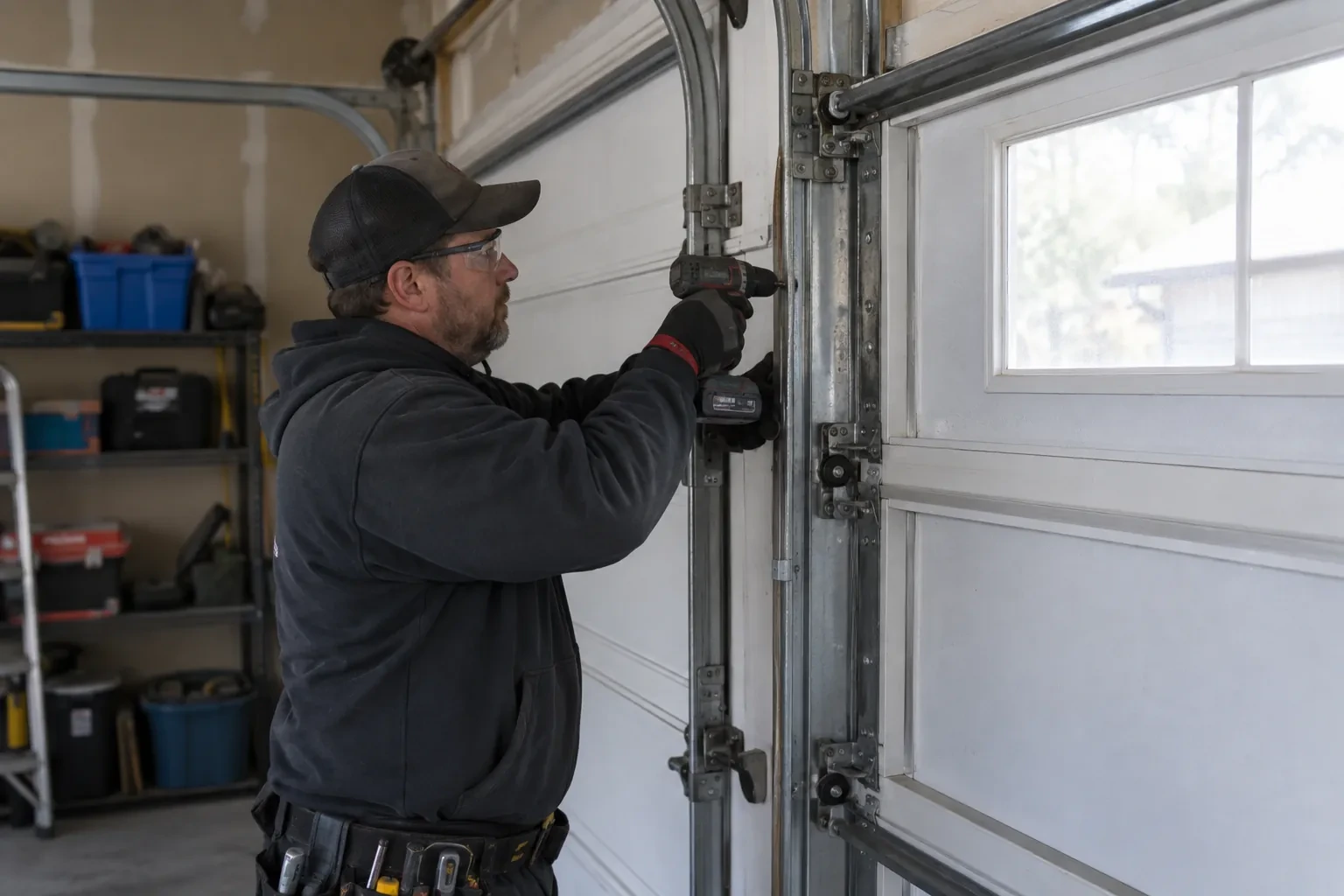
Most of the noise a garage door makes comes from its rollers. Steel wheels on a steel track are loud by nature and grow louder as their bearings dry out and pit, and the plastic wheels fitted to many new doors have no bearings at all, so they simply grind as they wear. Moving to nylon rollers with sealed ball bearings changes the sound of a door more than any other single part, because the nylon tire absorbs vibration instead of passing it into the track and the ceiling. The same visit lubricates the hinges and squares the track so the quiet lasts.
Weight and build of the door
A single-skin steel door, an insulated double-skin door and a solid wood door place very different loads on their rollers, and the top rollers on a heavy door carry the most, since they travel furthest along the horizontal track under load. The technician identifies the door's construction and approximate weight, checks whether the end stiles carry single or double hinges, and looks at the rating of the rollers currently fitted. Many heavier doors left the factory on light plastic wheels intended for the lightest door in the range. Matching the new set's load rating and bearing count to the actual door is what makes the replacement last.
Fitting a matched set
The new rollers go in as one set of one type, with the same wheel material, stem length, bearing count and load rating at every position where the hinges allow it. Mixing a couple of new nylon wheels among old steel ones leaves the door running unevenly and sounding different from side to side, so even when only two wheels looked worn, the whole set is normally changed. Where a heavier door needs seven- or ten-inch stems at the double hinges, those positions get long-stem rollers and the single-hinge positions get standard ones, all from the same range so the wheels ride at the same height in the track.
Signs to watch for next time
Rollers wear slowly, so it helps to know the early signals. A rhythmic clicking that travels with the door, like a train over rail joints, points to a bearing beginning to fail. A wheel that leans to one side in its hinge, or a door that starts to rock as it rounds the curve, suggests a stem or wheel wearing oval. Grinding that returns a day or two after lubrication means the wear is in the wheel, not the grease. Catching these while the door still runs makes the next roller change a planned visit rather than a door stuck halfway.