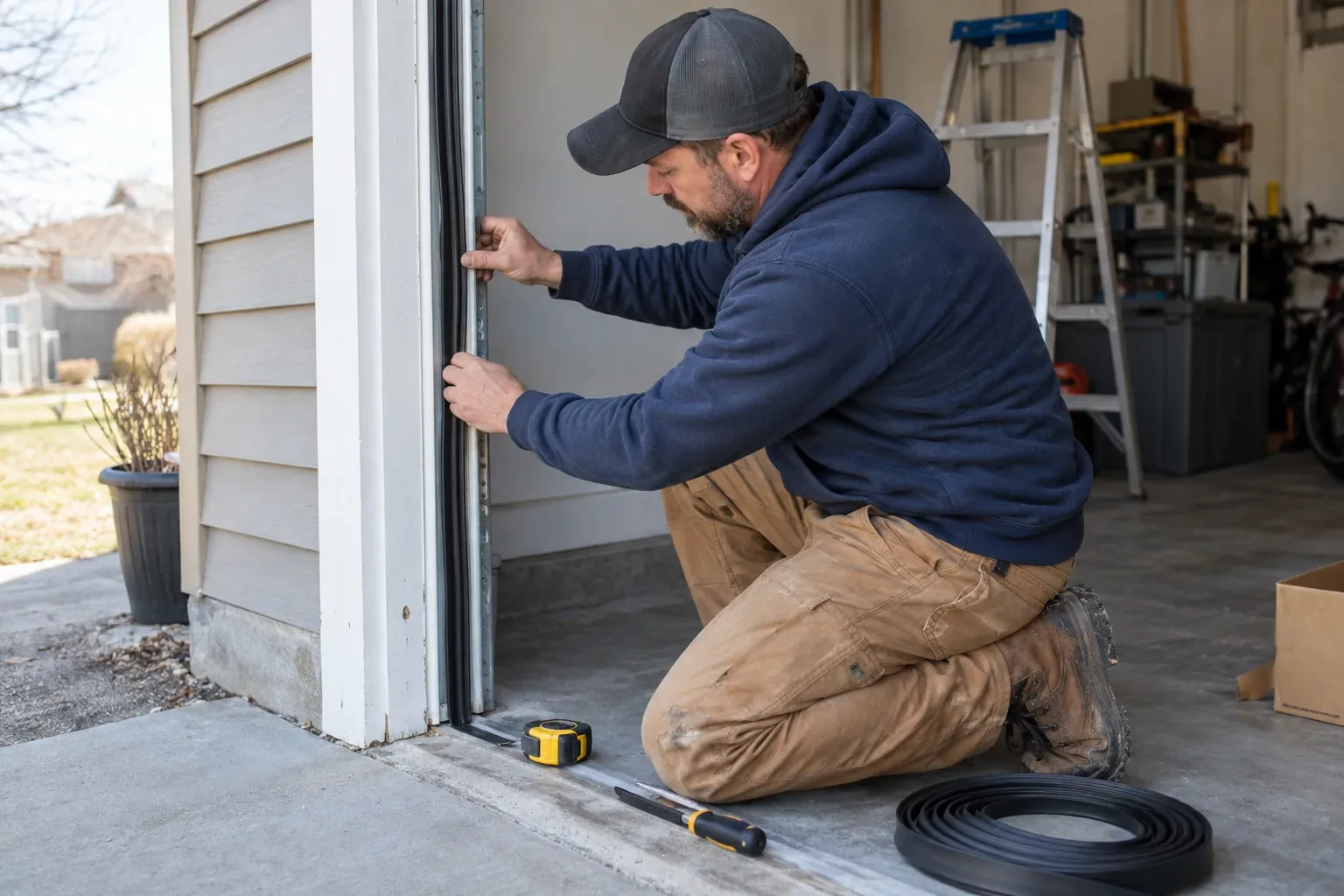
Openers · Welland
Emergency Release Repair
Halfway up, the door lets go of the opener with a clunk and sinks back to the floor while the trolley carries on to the top alone. It has happened three times this month, and each time the release lever is found half-cocked.
Emergency Release Repair
In plain words
What gets repaired depends on which link failed. A cord that rotted or snapped is simplest: a new rope and red handle, cut so the handle hangs no higher than about 1.8 metres and clears the car roof. A lever that will not stay latched needs its spring or the lever itself replaced. A trolley with worn latch teeth, or one driven hard into the stop bolt, is freed, adjusted or swapped for the assembly made for that opener. On the outside key release, a seized cylinder, a stretched cable or a lost key each has its own fix. The technician names the part before work begins.
How the visit goesHalfway up, the door lets go of the opener with a clunk and sinks back to the floor while the trolley carries on to the top alone. It has happened three times this month, and each time the release lever is found half-cocked.
Welland
How the visit goes
What kind of opener and rail
Release designs differ by opener, so the model is identified from its label before parts are chosen. A chain or belt unit on a one-piece rail pulls straight down; on a sectional square rail the cord is pulled down and then back to hold the lever; a screw-drive carriage has its own release; a wall-mounted unit beside the door uses a handle on a cable that clicks rather than a trolley on a rail. Age matters too: an older chain-drive head may take a different trolley from the current one. Knowing the exact unit means the replacement cord, lever, trolley or outside release cable is the one the maker specifies.
Freeing a trolley from the stop bolt
A trolley jammed against the stop at the end of the rail is freed rather than forced. The release is pulled so the door is out of the picture, the chain or belt tension nut is backed off a few turns to give the trolley room, and the motor is run so the trolley walks away from the stop. The travel limit that let it run too far is then adjusted, the chain or belt is re-tensioned to the sag the maker specifies for that rail, and the trolley is reconnected. Because the limits were touched, the door is cycled and the reversal tests are repeated before the job is called done.
A handle you can find in the dark
You are left with a red handle hanging at a height an adult can reach from the floor, clear of the car and visible from the door into the house. Nothing is tied around the rail, nothing is stacked beneath it. If the garage is dark in an outage, the handle is where your hand expects it. Keep it that way: when shelving, bikes or a storage platform go in, leave the space under the trolley open. Once a season, glance at the cord for fraying where it meets the lever, since sun through a window and winter cold both age rope.
Emergency Release Repair
In the van
- Hole saw for the top section
- Outside key release kit (lock, cable, keys)
- Release cable and clips
- Dry lock lubricant and de-icer
- Rope and red handle kit
What affects the quote
Same fees day, night or weekend
1Demonstration and labelling
Walking the household through the release, fitting a fresh warning and instruction label near the wall control, and adding handles or gripping points to the door are small tasks that are itemized when they are part of the visit.
2Freeing versus replacing the trolley
A trolley jammed on the stop bolt is freed, adjusted and reused when its latch is sound. One with worn teeth or a cracked body is replaced, which changes both parts and labour.
3Damage from a door that dropped
A release pulled on an unbalanced open door can bend the arm, the carriage, a bracket or a panel. Anything that took the impact is listed on its own once it has been seen.
Emergency Release Repair: questions
Why are the reversal tests done after a release repair?
Because freeing a trolley, changing a trolley or re-tensioning a chain or belt disturbs the travel limits and force settings the opener relies on. The tests prove those settings are still safe: closed onto a 2x4 lying flat, the door must reverse on contact; with something passed through the photo-eye beam while closing, it must stop and rise. They take a minute and are the same checks the standard asks of any working opener.
What is an outside key release, and should I add one?
It is a keyed cylinder, mounted through the top section on a sectional door or at mid-height on others, with a cable running back to the trolley lever. Turn the key, pull the cylinder, and the door is free to lift from the driveway. It earns its place on any garage where the overhead door is the only way in, especially a detached garage. It can be fitted during the same visit, with two keys, once the door and opener are checked for a compatible kit.
What happens if someone pulled the release while the door was open?
Sometimes nothing, if the door is well balanced and stayed where it was. If the door came down on its own, the technician checks what took the impact: the door arm, the carriage, the bottom brackets, the rollers and the panel around the arm bracket. A bent arm or carriage is replaced, and the balance test shows whether the springs contributed. Then the release is reconnected with the door closed and the household is shown the right sequence.
Openers & Access
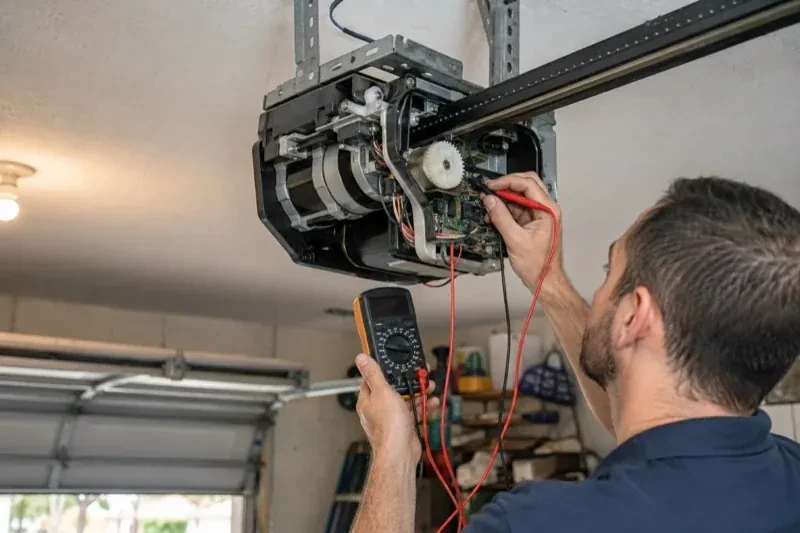
- Chain-Drive Opener RepairPress the button and the opener hums for a second, then quits.
- Belt-Drive Opener RepairHalfway up, every single time, the door hesitates and there is a ratcheting sound from the motor…
- Garage Door Opener ReplacementSince the storm the door behaves oddly: it reverses halfway down for no reason, the light flickers…
Emergency Release Repair near you
Households in Welland mostly need three things from us over the life of a door: a tune-up now and then, a spring or cable when one lets go, and a new opener or door when the old one is finished. Every one of those, plus the smaller jobs between, is covered below.