Springs · Welland
Torsion Spring Replacement
On a cold morning the remote does nothing useful: the light comes on, the motor turns briefly, the door stays shut. There may be a fresh crack in a rusty coil, and flakes of orange on the floor below the shaft.
Torsion Spring Replacement
In plain words
Every spring is built for a number of open-close cycles, and replacement is a natural moment to choose that number deliberately. A standard residential spring is commonly rated around ten thousand cycles; a family that opens the door six times a day uses those up in a few years. Higher-cycle springs use heavier wire and a longer coil to produce the same force with less stress on the steel, so they last proportionally longer. The technician can explain the trade-off and fit whichever option suits the household's use of the door, then wind and balance it accordingly.
How the visit goesOn a cold morning the remote does nothing useful: the light comes on, the motor turns briefly, the door stays shut. There may be a fresh crack in a rusty coil, and flakes of orange on the floor below the shaft.
Welland
How the visit goes
Understanding how the door is used
How the household uses the door shapes the spring that suits it. The technician asks how many times a day it typically opens, whether it is the main entrance to the home, and when springs were last replaced, if ever. A door cycled eight times a day accumulates use far sooner than a weekend garage. Age of the door and any previous partial repairs are also relevant, especially a single spring changed on a paired system. This conversation lets the customer choose between a standard-cycle spring and a higher-cycle option with a clear picture of what each means for them.
The replacement from start to finish
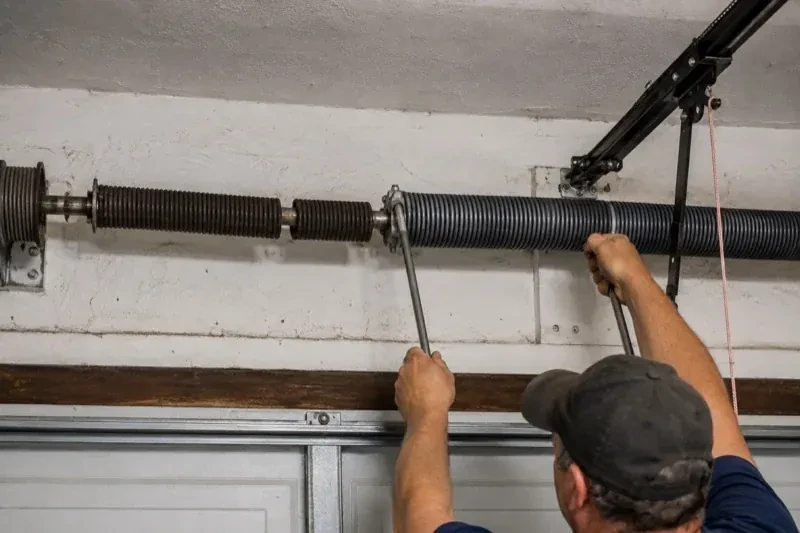
With the door clamped and the opener disconnected, the technician releases any tension left in an intact spring, loosens the drum set screws and slides the drums inward, then removes the old spring from the shaft. Bearings are inspected while the shaft is free. The new spring goes on with its stationary cone bolted to the centre bracket and the winding cone facing the drum. Drums are refitted, cables seated, the shaft levelled and cable tension evened on both sides. Winding follows, then the set screws are seated and the clamps come off for a balance check. Each stage is done deliberately and in order.
Signs worth noticing going forward
A healthy spring system is quiet and even, so changes stand out. Listen for a new grinding or popping sound as the door moves, watch that both sides of the door rise together, and look at the cables for fraying or a loop that has left the drum groove. Rust streaks below the shaft, a door that takes noticeably more effort by hand, or an opener that starts to strain are all early indicators that something in the balance system wants attention. Catching these early keeps repairs small and lets the household plan a visit rather than face a stuck door.
Torsion Spring Replacement
In the van
- Lift cables
- Winding bars
- Cable drums
- End bearing plates
- Wire gauge and tape measure
What affects the quote
Same fees day, night or weekend
1Opener reconnection and testing
Resetting force and travel limits and running the reversal and photo-eye tests are part of the visit. An opener with worn gears or a slipping trolley uncovered during testing becomes a separate item.
2Spring specification
The wire size, inside diameter and length that the door's weight and height demand determine which spring is fitted. Larger doors take larger springs, and unusual combinations may need specially wound coils.
3Anchoring to the header
A centre bracket with pulled lag bolts, a split header or a corroded bracket needs refastening, reinforcing or replacement before the spring can be wound, which is included when found.
Torsion Spring Replacement: questions
What other parts are often replaced with the spring?
The shaft is free during a spring change, which makes it the natural time to renew the centre bearing and end bearings if they grind or wobble. Lift cables that show fraying or rust at the bottom brackets are replaced so the new spring pulls on sound steel, and cracked or worn drums are swapped. On older doors, a corroded centre bracket or loose lag bolts may also be addressed. Each item is shown and explained before it is added.
What is the difference between galvanized and oil-tempered springs?
Oil-tempered springs are the traditional dark grey or black coil; they hold their tension well over time and are widely used. Galvanized springs have a zinc coating that resists rust, which is useful in damp garages, though they tend to relax slightly and may need a small adjustment after settling in. Both are available in standard and high-cycle ratings, and the technician can explain which suits your garage.
What happens if the header wood or centre bracket is damaged?
The centre bracket anchors the spring's reaction force to the framing above the door, so it has to be solid. If the header has split or softened, or the lag bolts have pulled, the technician can refasten into sound wood, add a reinforcing plate or replace the bracket before the new spring is wound. Dealing with this first keeps the shaft level and the spring pulling straight, which protects the bearings and the door.
Springs & Hardware
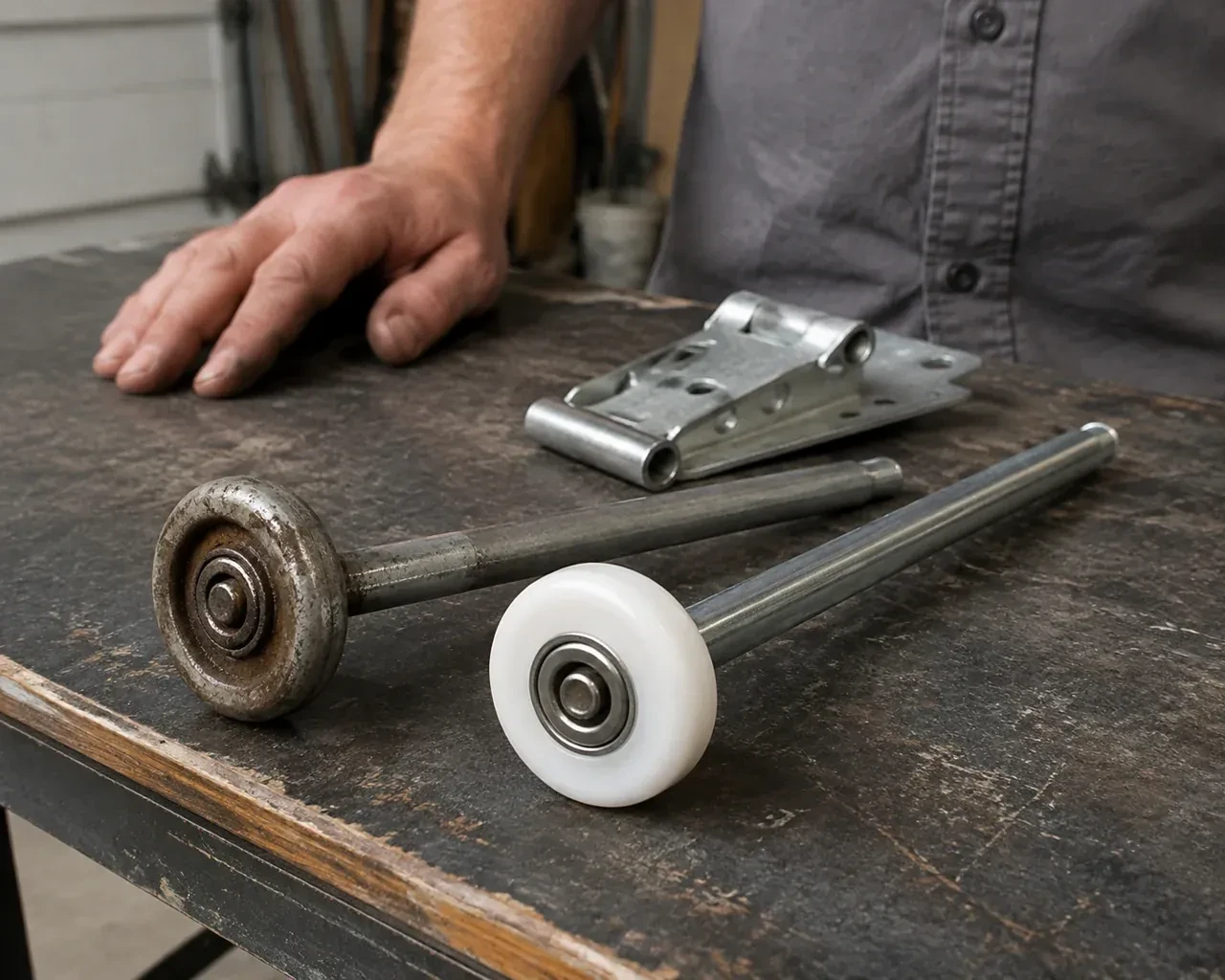
- Garage Door Hinge ReplacementEvery time the door goes up there is a sharp pop from the same spot, about a metre off the floor…
- Garage Door Track Repair or ReplacementThe horizontal rail toward the back of the garage sags noticeably.
- Garage Door Cable ReplacementThe door went up as usual this morning, then stopped a third of the way with one corner higher than…
Torsion Spring Replacement near you
Households in Welland mostly need three things from us over the life of a door: a tune-up now and then, a spring or cable when one lets go, and a new opener or door when the old one is finished. Every one of those, plus the smaller jobs between, is covered below.