Springs · Welland
Garage Door Balance Adjustment
Someone replaced the springs a while back and the door has bounced at the top ever since. It slams open against the stops, then creeps down a few inches, and the opener trolley rattles because the door is pushing where it should be resting.
Garage Door Balance Adjustment
In plain words
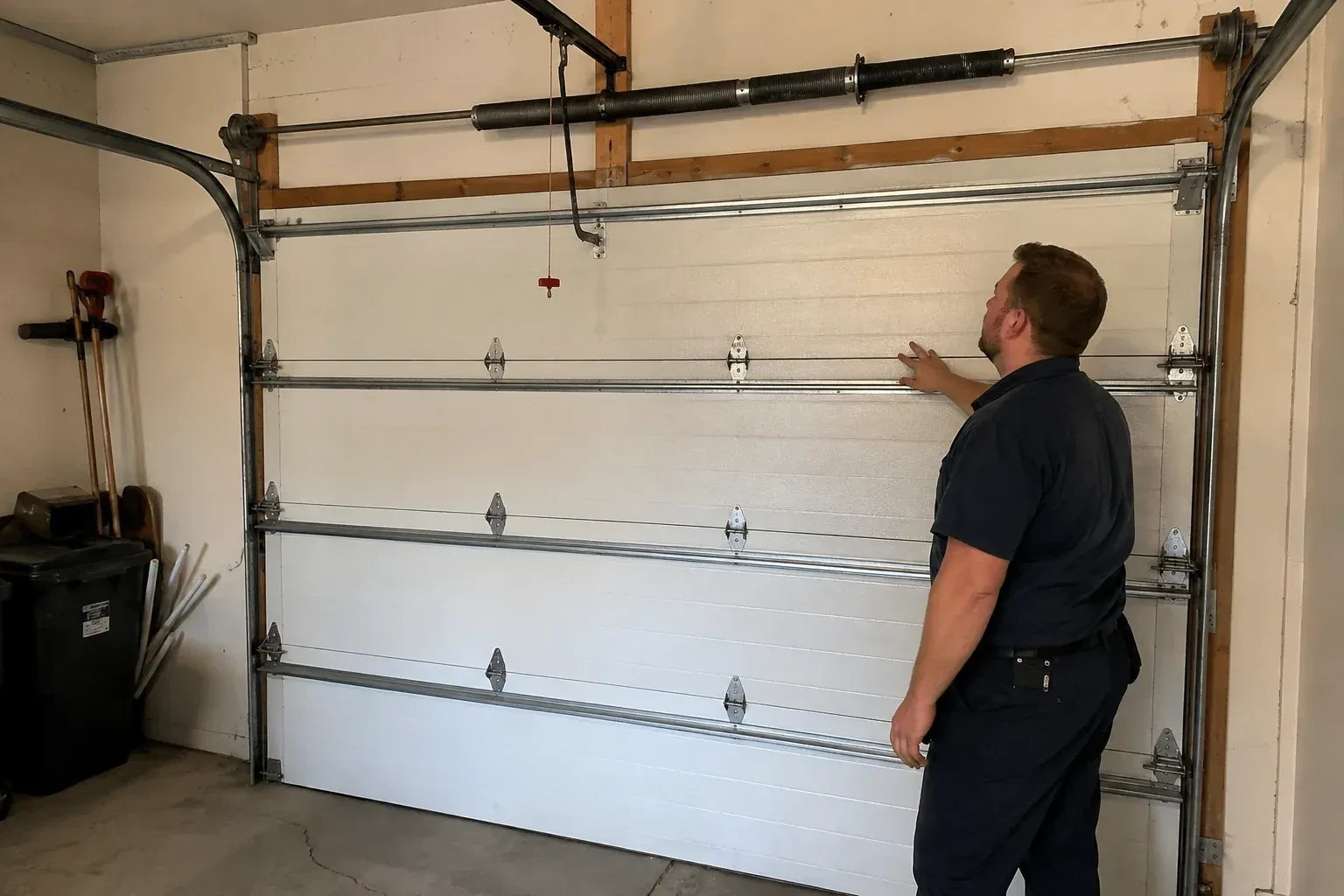
A balance visit follows a settled order. The technician first checks for a broken spring, displaced cable, binding or track damage; once safe to move, the door is run through a powered cycle, then released to repeat the movement by hand, separating the motor from the door. Springs, cables, drums, rollers, hinges and track are inspected before anything changes. Adjustment comes next, in small steps with a test after each one, until the door holds at every height and sits level. Finally the opener is reconnected, its settings reviewed against the newly balanced door, and the reversing safety tests run while you watch.
How the visit goesYou pulled the red cord to move the door by hand during the power cut, lifted it to about waist height and let go. Instead of staying put, it kept climbing on its own and thumped into the fully open stop.
Welland
How the visit goes
Friction along the path
Some doors that feel heavy are not short of spring tension at all; they are dragging. The technician runs a hand and an eye along the vertical and horizontal tracks for dents, misaligned joints and brackets that have pulled away from the jamb, spins each roller to find seized bearings or cracked wheels, and flexes each hinge for play or splits. Dry, worn rollers alone can add real effort to every lift. Binding at one point in the travel, rather than heaviness everywhere, is the signature of a friction problem, and correcting it first means the springs are then adjusted to the door's true weight rather than to the drag.
Securing the door before the first turn
Before any tension changes, the door is made immovable. The technician disconnects the opener, clamps a pair of locking pliers on the track just above a roller so the door cannot rise, and clears the area under the shaft. On a torsion system the springs remain wound while the winding bars are used to add or subtract turns, so nothing has to be fully unloaded for a simple adjustment. On an extension system the door is raised fully and clamped there, which relaxes the springs so the hooks and clips can be moved safely. This setup takes a few minutes and is what makes the adjustment itself calm and controlled.
Watching for the early signs of drift
You will now know what the door feels like when it is right, which makes small changes easy to spot. A door that begins to close with a heavier thud, an opener that pauses at the top or hums a little longer, a gap appearing under one corner, or a door that no longer quite stays fully open when released are all early signs. Cold weather can make the door feel a little heavier for a few weeks without anything being wrong. But a door that stalls, races or no longer passes its balance check is telling you to stop using it and book an inspection promptly rather than waiting out the season, since the cause is not always minor.
Garage Door Balance Adjustment
In the van
- Extension springs and S-hooks
- Garage-door lubricant
- Winding cone set screws
- Door scale
- Nylon or steel rollers
What affects the quote
Same fees day, night or weekend
1Door height and lift type
Taller doors and high-lift or vertical-lift hardware carry more spring turns and different drums, so setting and testing them takes longer than a standard seven-foot door.
2Whether a second person is needed to support the door
A heavier double door or one already sitting unevenly is sometimes safer to adjust with a second person steadying it while the springs are reset. That extra pair of hands is called in once the technician sees how the door is behaving on site.
3Access to the spring shaft
Shelving, bikes or storage close to the header, a very high ceiling or a tight low-headroom installation slow the work. Clearing the area beforehand helps the time quoted.
Garage Door Balance Adjustment: questions
What is the difference between balancing a torsion door and an extension-spring door?
A torsion door has springs on a shaft above the opening, and tension is changed by winding the springs with steel bars, a quarter turn at a time. An extension door has springs along the tracks, and tension is changed by moving the hook or cable clip to a different position with the door open and clamped. The hand test that proves the result is the same for both.
Why does my door drift upward when I let go of it?
Too much spring tension. The springs are pulling harder than the door weighs, so at rest they win and the door climbs. This often follows a spring replacement wound a turn too far, or a door that lost weight when heavy panels were swapped for lighter ones. Releasing a quarter turn or two, tested after each, brings it back to holding still.
Why does my door sink or slam down when released?
Not enough spring tension for the door's weight. Springs lose a little pull as they age through thousands of cycles, and a door gains weight when insulation, windows or a heavier seal are added. Either way the door outweighs its springs. Adding tension in measured quarter turns restores the hold, provided the springs are sound; if they are near the end of their life, new ones are the right answer.
Springs & Hardware
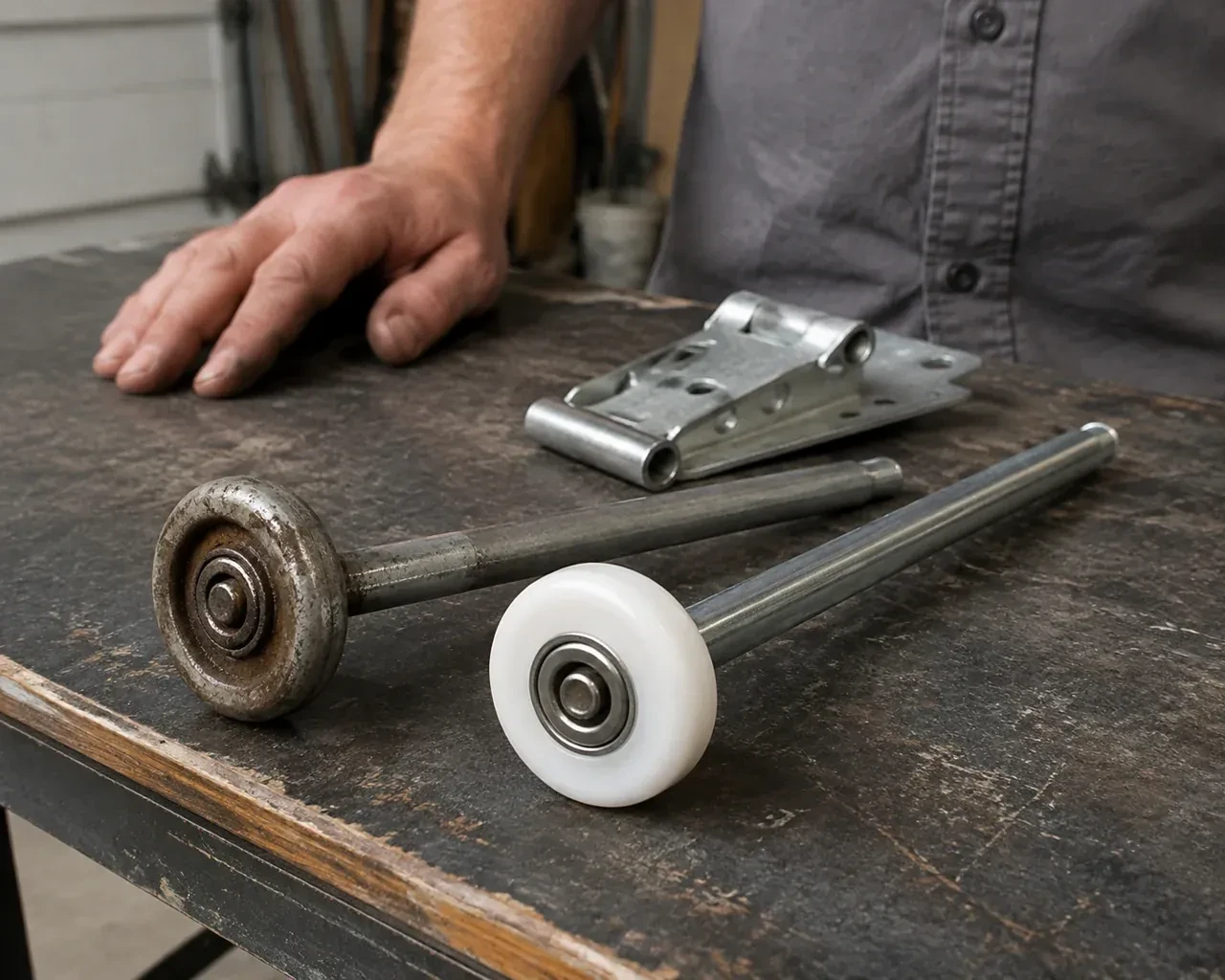
- Garage Door Hinge ReplacementEvery time the door goes up there is a sharp pop from the same spot, about a metre off the floor…
- Garage Door Track Repair or ReplacementThe horizontal rail toward the back of the garage sags noticeably.
- Garage Door Cable ReplacementThe door went up as usual this morning, then stopped a third of the way with one corner higher than…
Garage Door Balance Adjustment near you
Households in Welland mostly need three things from us over the life of a door: a tune-up now and then, a spring or cable when one lets go, and a new opener or door when the old one is finished. Every one of those, plus the smaller jobs between, is covered below.